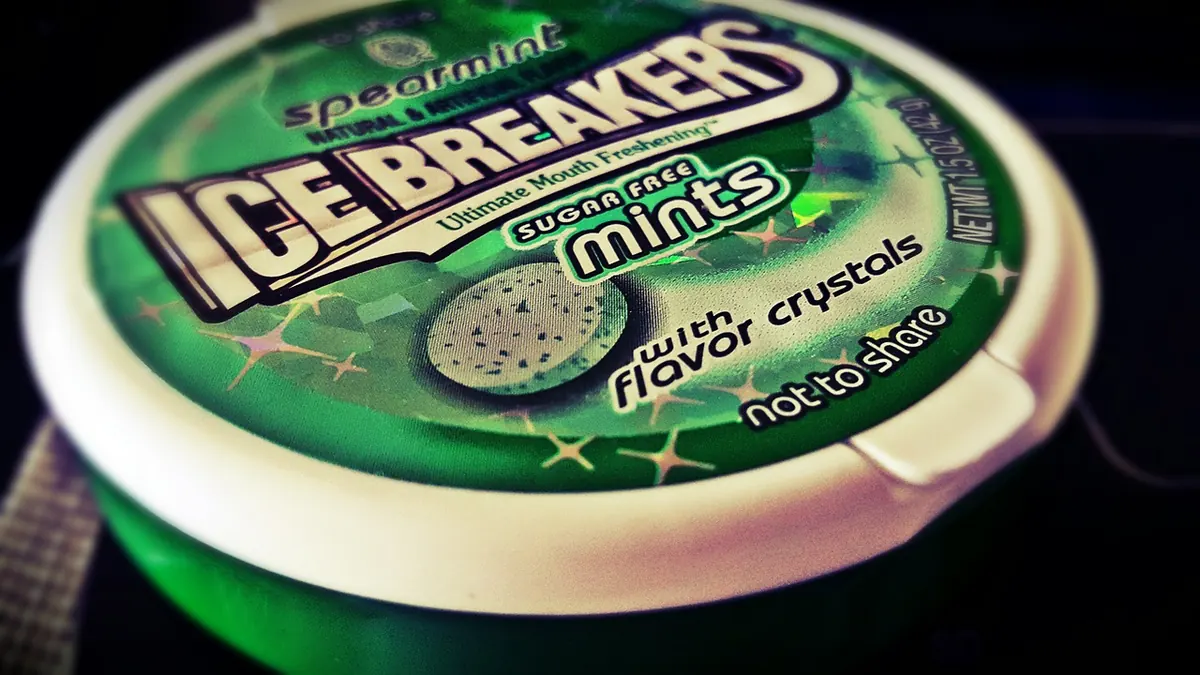
A sugar-free mint looks like the simplest thing in the tin. Then you turn it over and read the small print: sorbitol, isomalt, xylitol, sucralose, steviol glycosides, acesulfame K. Each of those is doing a different job, and each behaves differently in your mouth, your gut, and your dentist's opinion of you. Knowing which is which turns a confusing label into a ten-second decision: worth a second mint, or better left on the shelf.
What "sugar-free" actually means on a UK label
"Sugar-free" is not marketing language. It is a regulated nutrition claim, and in the UK it can only be used where a product contains no more than 0.5g of sugars per 100g. That is a strict threshold, which is why almost every mint carrying the claim leans on polyols, high-intensity sweeteners, or both.
Watch the difference between "sugar-free" and "no added sugar". The second means no sugar was added during manufacture, but the product can still contain sugars that occur naturally in its ingredients. In a plain mint that rarely matters. In a chocolate-coated or fruit-filled one, it can.
On the nutrition panel, polyols get their own line, usually under "of which sugars" as "polyols" or "polyols (polyhydric alcohols)". They are carbohydrates, but they are not classed as sugars — which is exactly why a mint can be both sugar-free and bulked out with something sweet-tasting.
The polyols you will see most often
- Sorbitol — the old workhorse. Cheap, moderately sweet, and one of the more likely to cause digestive trouble in quantity.
- Xylitol — about as sweet as sugar, with a strong cooling sensation. Popular in mints and chewing gum because of its dental reputation.
- Maltitol — tastes closest to ordinary sugar, which is why it appears in sugar-free chocolate and toffees as well as mints. Also the polyol most often blamed for an upset stomach.
- Isomalt — common in hard, boiled-style sugar-free sweets. Less sweet than sugar and handles heat well.
- Erythritol — roughly 60–70% as sweet as sugar, very cooling, and absorbed before it reaches the colon, so it tends to be gentler on the gut. It also carries far fewer calories than other polyols.
- Mannitol — cooling and often used in coatings and dusting powders rather than as the main bulk.
Polyols are not calorie-free. Most provide around 2.4 kcal per gram against sugar's 4, so a mint tin is not a free pass. Erythritol is the notable exception, contributing only a fraction of that.
High-intensity sweeteners: the top notes
These are the ones that make a mint sweet without adding bulk: aspartame, acesulfame K, sucralose, saccharin, steviol glycosides (stevia) and occasionally thaumatin. They are used in tiny amounts, so they are usually listed low down in the ingredients, but they dominate the flavour.
As a rough guide to what you are tasting: aspartame is clean and sugar-like but fades quickly; sucralose is sweeter and leaves a longer tail; acesulfame K has a slightly metallic edge that shows up more the more of it is used; saccharin has a recognisable metallic note; stevia brings a herbal, faintly liquorice bitterness that some people love and others cannot get past. Products containing aspartame must carry a warning about phenylalanine for people with phenylketonuria, which is why you often see that line on a tin.
The laxative question
Polyols are only partly absorbed in the small intestine. The portion that survives draws water into the gut and is then fermented by bacteria in the colon, producing gas. The result, in enough quantity, is wind, bloating, cramping and loose stools. It is not an allergy and it is not dangerous for most people, but it is predictable.
UK labelling rules acknowledge this directly. Where a food contains more than 10% added polyols, the packaging must state that excessive consumption may produce laxative effects. If you see that sentence, the tin is telling you something useful rather than covering itself.
Working out your own tolerance
Try a small amount first — two or three mints, not a whole tin — and see how you feel over the next few hours. Keep an eye on the day as a whole, because polyols stack up: a protein bar, a handful of sugar-free sweets and a packet of gum can easily add more than the mints alone. Sorbitol and maltitol are the usual culprits; erythritol is the least likely to cause a problem. If you have a diagnosed digestive condition such as IBS, or you are managing diabetes, get advice from a pharmacist or dietitian rather than guessing.
Do the dental claims hold up?
Broadly, yes — with caveats. Sugar-free mints do not feed the plaque bacteria that produce acid, and polyols such as xylitol, sorbitol, mannitol, isomalt and maltitol are classed as non-cariogenic. Authorised health claims exist for sugar-free chewing gum around maintaining tooth mineralisation, and for xylitol gum specifically in reducing plaque.
Two things to keep in mind. First, mints are not gum: chewing provides mechanical cleaning that a dissolving mint cannot. Second, "tooth friendly" is a regulated claim, allowed only where the product does not push plaque pH down into the acid range during consumption. That is a real standard, but it still does not replace brushing, flossing or a check-up.
One practical warning for dog owners: xylitol is toxic to dogs, even in small amounts. Keep tins and bags well out of reach.
Aftertaste: cooling, bitterness and cling
Polyols dissolve with an endothermic reaction, which your tongue reads as cold. Erythritol and xylitol are the strongest offenders — pleasant in a peppermint, odd next to coffee or chocolate. Bitterness usually comes from stevia, saccharin or a heavy hand with acesulfame K, while sucralose tends to leave a sweetness that water does not shift.
If aftertaste is your main complaint, suck rather than crunch, drink water alongside, and try spearmint if peppermint feels harsh. Checking the ingredients order helps too: flavourings are listed by weight, so the first one named is the biggest.
How to read a mint tin in 30 seconds
- Go to the nutrition panel. Sugars should be at or near zero; note the polyols figure and what it means per mint.
- Scan the ingredients for which polyol comes first — that is the one you are getting most of.
- Look for the laxative warning. If it is there, treat the tin as a portion-controlled item.
- Check the sweetener blend. One high-intensity sweetener usually tastes cleaner than three stacked together.
- Buy a small tin of anything new before committing to a multipack.
A good sugar-free mint is not the one with the longest ingredient list. It is the one whose polyol you tolerate, whose sweetener you actually like the taste of, and whose tin you can finish a few at a time without regret.
Photo: joan202360 / Pixabay